Mike Leah’s WSOPE Rounder Cup Win: Strategy Breakdown
Canadian poker pro Mike Leah captured his second WSOP bracelet at the 2026 WSOPE Rounder Cup, banking €292,000 after surviving a grueling heads-up battle that saw him come back from the brink multiple times. The victory caps off an extraordinary spring run that’s seen Leah dominate tournaments across multiple continents, proving that strategic patience and mental fortitude still reign supreme in tournament poker.
What Happened
The WSOPE Rounder Cup attracted 647 entries at €2,750 each, creating a prize pool of €1,617,500. The tournament featured a unique format that pitted European players against the rest of the world, with separate Day 1 flights before combining fields on Day 2.
Leah entered the final table with the chip lead but faced stiff resistance from Georgia’s Tornike Tchkonia during heads-up play. Tchkonia actually seized the lead at multiple points and had legitimate opportunities to close out the tournament, but Leah’s resilience showed through as he mounted comeback after comeback.
The Rest of the World contingent dominated the final table, claiming seven of nine seats despite having fewer total entries than the European flight. Shaun Deeb, representing the World side, busted in ninth place after another brutal beat—continuing his rough variance at the 2026 WSOPE series.
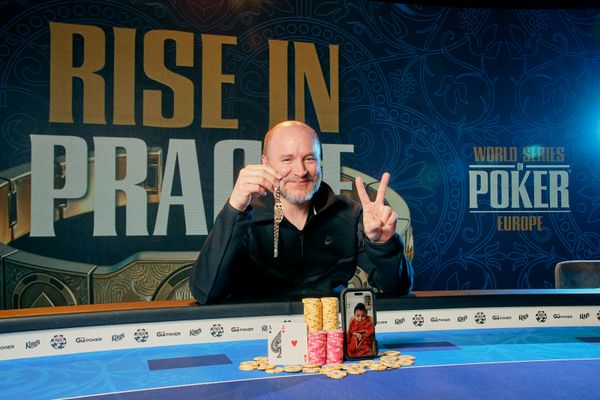
For Leah, this bracelet represents his first WSOP gold since the 2014 WSOP Australia series. More importantly, it extends a heater that began in March at Casino Regina’s Station Poker Classic, where he won consecutive events and finished runner-up in a third. He also added an online WSOP Circuit ring during that stretch, making this spring one of the most profitable periods of his career.
The victory pushes Leah’s career tournament earnings past €8.29 million, while runner-up Tchkonia collected €192,000—nearly doubling his career tournament earnings to over €273,200.
The Poker Strategy Breakdown
Leah’s path to victory offers several strategic lessons, particularly in how he managed the extended heads-up battle. Coming into the final day with the chip lead, he faced a classic tournament dilemma: whether to apply maximum pressure or play conservatively to preserve his advantage.
The heads-up match became a war of attrition. When Tchkonia grabbed the lead, many players would have tightened up significantly, waiting for premium hands to make a stand. Instead, Leah continued finding spots to double up, suggesting he maintained an aggressive posture even when behind.
This approach aligns with modern tournament theory. In deep-stacked heads-up scenarios, the player willing to contest more pots typically gains an edge. With blinds representing a smaller percentage of effective stacks, there’s room to maneuver, bluff, and apply pressure across multiple streets.
Leah himself acknowledged the dynamic nature of deep-stacked play: “A lot of stuff can happen when you’re that deep.” This isn’t just an observation—it’s a strategic philosophy. Deep stacks create opportunities for skilled players to leverage their edge across hundreds of decisions rather than relying on a few critical all-in confrontations.
The multiple doubles Leah secured during heads-up play suggest he was willing to get his stack in the middle in marginal spots rather than slowly blinding down. This aggression is crucial in heads-up poker, where waiting for premium hands often means surrendering too much equity to blinds and antes.
Reading The Field & Table Dynamics
The Rounder Cup’s unique Europe vs. World format created interesting psychological dynamics that extended beyond standard tournament play. The geographical split added an extra layer of competition and potentially influenced decision-making at critical moments.
Shaun Deeb’s observation about European players potentially stalling on Day 1 to ensure they’d play alongside the World contingent highlights how tournament structure can impact strategy. Whether intentional or not, pace of play becomes a strategic consideration when fields are scheduled to merge.
The final table composition—seven World players versus just two Europeans—suggests the Rest of the World contingent played more aggressively during the combining phase. This could reflect different strategic approaches between the two groups or simply variance in card distribution.
At the final table itself, ICM considerations would have heavily influenced play, particularly for middle-stack players. With significant pay jumps between positions, players like Joris Ruijs (5th, €66,100) and Mehdi Chaoui (6th, €48,100) faced difficult decisions about when to apply pressure versus when to ladder up.
Deeb’s ninth-place elimination came via what he described as a “suck out” on the final table bubble—a particularly painful spot given the €7,200 pay jump to eighth place. His willingness to get his chips in the middle despite the bubble pressure demonstrates the aggressive approach that’s made him one of poker’s most successful tournament players, even when variance doesn’t cooperate.
For Leah, managing the chip lead required constant awareness of stack sizes and payout implications. With a commanding stack, he could apply pressure on medium stacks who were trying to ladder, while being cautious against short stacks looking to double through the big stack.
How To Apply This To Your Game
Leah’s victory offers several actionable lessons for tournament players at all levels:
Embrace deep-stacked complexity: When you have significant chips behind, don’t default to push-fold poker. Deep stacks create opportunities for skilled post-flop play. Use your stack depth to see flops in position, apply pressure across multiple streets, and force difficult decisions on your opponents.
Maintain aggression when behind: Leah’s multiple doubles during heads-up play suggest he didn’t turtle up when Tchkonia took the lead. In tournament poker, especially heads-up, waiting for premium hands while your stack erodes is often the worst strategy. Find spots to contest pots and create fold equity.
Manage your tournament schedule strategically: Leah’s comment about not being able to play full WSOP summers anymore reflects a mature approach to poker. He targeted specific high-value events at WSOPE to maximize his bracelet opportunities while balancing family commitments. This selective approach can actually improve results by ensuring you’re fresh and focused for key tournaments.
Recover from setbacks: This was Leah’s first bracelet in 12 years. Rather than letting that drought define him, he continued grinding and improving his game. Long-term success in poker requires weathering downswings and maintaining confidence in your abilities.
Adapt to unique formats: The Europe vs. World structure created different dynamics than standard tournaments. Being aware of how tournament structures influence player behavior—and adjusting accordingly—separates good players from great ones.
Balance risk and reward at final tables: Leah protected his chip lead without playing so conservatively that he allowed opponents to chip away at his stack. Find the middle ground between reckless aggression and passive play that lets you maintain pressure while avoiding unnecessary risks.
Key Takeaways
- Mike Leah won his second WSOP bracelet and €292,000 at the WSOPE Rounder Cup, extending a remarkable spring heater that includes back-to-back wins in Canada and an online Circuit ring
- The tournament’s Europe vs. World format created unique dynamics, with the Rest of the World dominating the final table 7-2 despite having fewer total entries
- Leah’s heads-up victory over Tornike Tchkonia required multiple comebacks and demonstrated the importance of maintaining aggression even when behind in chip count
- Deep-stacked tournament play rewards players who can navigate complex post-flop situations rather than relying solely on preflop all-ins
- Strategic tournament selection—targeting high-value events rather than grinding every tournament—can be more profitable than maximum volume, especially for players with outside commitments
- Mental fortitude and resilience remain critical skills in tournament poker, as Leah proved by capturing his first bracelet in 12 years
Frequently Asked Questions
How does the WSOPE Rounder Cup format work?
The Rounder Cup features a unique Europe vs. The World format with separate Day 1 flights for European players and players from the rest of the world. The fields combine on Day 2, creating an interesting dynamic where geographical pride adds an extra competitive element beyond standard tournament play.
What makes Mike Leah’s spring 2026 run so impressive?
Leah won back-to-back events at Casino Regina’s Station Poker Classic in March, finished second in a third event there, captured an online WSOP Circuit ring, and then won the WSOPE Rounder Cup for his second career bracelet. This string of results in a short timeframe represents one of the hottest tournament runs of the year and demonstrates sustained excellence rather than a single lucky score.
How should you adjust your strategy in heads-up tournament play?
Heads-up tournament poker requires significantly more aggression than full-table play. You should contest a much wider range of pots, apply pressure with position, and avoid waiting for premium hands while your stack erodes to blinds. When deep-stacked, focus on outplaying opponents post-flop rather than relying on preflop all-ins. Mental stamina also becomes crucial as heads-up battles can extend for hours.
Final Thoughts
Mike Leah’s WSOPE Rounder Cup victory represents more than just another tournament win—it’s a masterclass in tournament poker fundamentals executed at the highest level. His ability to maintain composure during a marathon heads-up battle, mount multiple comebacks, and close out the tournament demonstrates why he’s remained one of poker’s most consistent performers over more than a decade.
Perhaps most impressive is how Leah has adapted his poker career to fit his life circumstances rather than letting poker consume everything. By selectively targeting high-value events like the WSOPE series, he maximizes his opportunities while maintaining the balance needed to stay sharp and motivated. This approach offers a blueprint for sustainable long-term success in tournament poker.
For players looking to improve their tournament game, Leah’s victory offers clear lessons: embrace complexity in deep-stacked situations, maintain aggression even when behind, and develop the mental fortitude to weather the inevitable swings that come with tournament poker. These fundamentals never go out of style, regardless of how the game evolves.
Ready to Sharpen Your Poker Game?
Master your poker game with expert hand analysis